

Local SEO for Small Motels: Why Your Phone Number Is the Biggest Lever
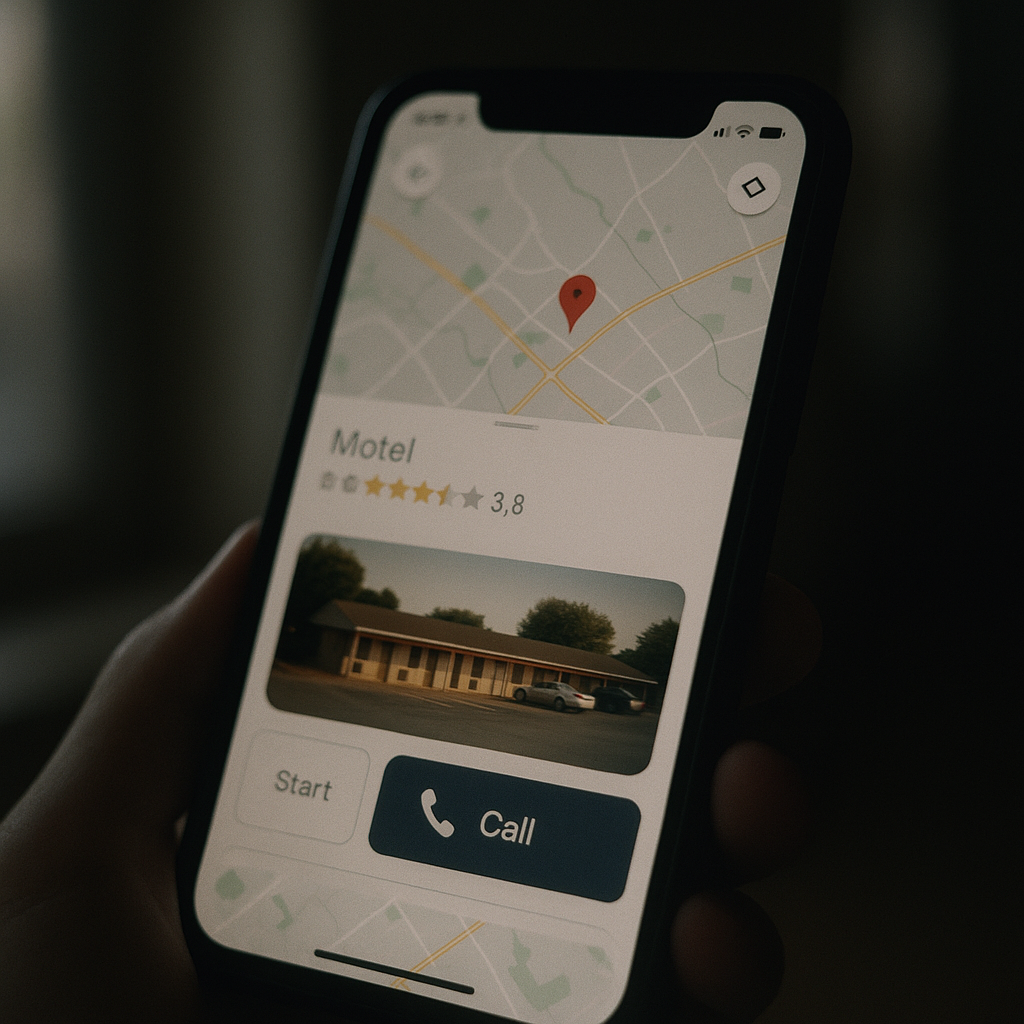
If you run a small motel, hostel, or roadside inn, you already know how bookings actually happen. A traveler searches on Google, sees your listing, taps the phone number, and decides in two minutes whether to book or move on.
That means your local SEO is not just about ranking. For small motel local SEO phone performance, your phone number is often the shortest path from search to revenue, and the easiest place to lose business if nobody answers.
Why the phone number matters more than most owners think
Section titled “Why the phone number matters more than most owners think”For independent properties, Google Business Profile is often your real homepage. Before a guest visits your website, they see your reviews, photos, rates, map location, and most importantly, your call button.
Google Business Profile drives high-intent traffic
Section titled “Google Business Profile drives high-intent traffic”A person searching “motel near me,” “cheap motel in Amarillo,” or “pet-friendly inn off I-75” is usually not browsing casually. They need a room soon. Local search traffic has strong booking intent, especially for same-day or next-day stays.
In that moment, the phone number on your Google Business Profile does three jobs:
- It proves your business is real and active.
- It gives the guest the fastest way to get answers.
- It becomes the conversion point for your local SEO.
A lot of owners spend time improving photos and collecting reviews, which matters. But if your call experience is weak, the rest of your local SEO underperforms.
Click-to-call is often the highest-intent lead source
Section titled “Click-to-call is often the highest-intent lead source”Website traffic includes a lot of comparison shopping. Phone calls are different. When someone taps to call, they usually want one or more of these answers right now:
- Do you have a room tonight
- What is the rate
- Can I bring a dog
- Is parking free
- Can I check in late
- Do you have smoking or non-smoking rooms
- Are you near the highway, airport, or attraction they care about
These are booking questions, not research questions. If the call goes unanswered, hits voicemail, or gets handled poorly, your local SEO lead disappears before it ever reaches your reservation system.
Your ranking matters, but your response rate matters too
Section titled “Your ranking matters, but your response rate matters too”Owners often think local SEO ends when they show up in the map pack. It does not. Showing up gets you the chance. Answering the phone converts it.
For small motel local SEO phone performance, this is the chain:
- Google search
- Google Business Profile impression
- Click-to-call
- Fast answer
- Clear information
- Reservation
Break any step and revenue drops.
How Google Business Profile and your phone work together
Section titled “How Google Business Profile and your phone work together”Google Business Profile is where many travelers decide whether to call you or the motel across the street. The phone number listed there needs to support trust, consistency, and actual availability.
Keep your business information consistent everywhere
Section titled “Keep your business information consistent everywhere”Google compares your motel’s name, address, and phone number across the web. This is often called NAP consistency. If your phone number is different on your website, OTA listings, chamber directory, Facebook page, and old local citations, you create confusion for both guests and search engines.
Make sure your main number is consistent on:
- Google Business Profile
- Your website header and contact page
- Facebook and Instagram profiles
- Yelp and local directories
- OTA profiles where applicable
- Apple Maps and Bing Places
If you use a tracking number, be careful. Tracking can help attribution, but not if it creates citation inconsistencies that weaken local SEO. In many cases, the safest approach is to keep your main published number as the primary number and use approved methods for tracking where possible.
Your primary category and attributes affect call volume
Section titled “Your primary category and attributes affect call volume”Phone performance is tied to visibility. Make sure your Google Business Profile is fully completed:
- Correct primary category such as Motel, Hotel, Hostel, or Bed & Breakfast
- Secondary categories where relevant
- Amenities and attributes like pet-friendly, free parking, Wi-Fi, breakfast, pool, truck parking, late check-in
- Business hours and front desk hours
- Booking link and website link
- Updated photos of rooms, exterior, parking, and signage
This matters because many calls happen after a guest has already filtered options. If your profile tells them you match their needs, they are more likely to call you first.
Reviews increase calls, but calls also protect reviews
Section titled “Reviews increase calls, but calls also protect reviews”There is a two-way relationship here. Better reviews can increase call volume. Better call handling can also improve reviews because guests get accurate expectations before arrival.
When guests call to confirm room type, after-hours check-in, pet policy, or parking, they are giving you a chance to prevent a mismatch. That reduces frustration later.
A missed or rushed call does the opposite. The guest may still book through an OTA, show up with the wrong assumptions, and leave a negative review.
The biggest local SEO leak: missed calls
Section titled “The biggest local SEO leak: missed calls”Many small properties believe they have a traffic problem when they really have a missed-call problem. If your phone is unanswered during busy hours, housekeeping time, owner errands, or late evenings, your local SEO is already costing you money.
What a missed call really means
Section titled “What a missed call really means”A missed call is not just one unanswered ring. It usually means:
- A guest who was ready to book found another property
- A price-sensitive traveler booked the first place that answered
- A same-day booking went to an OTA competitor
- A repeat guest decided you seemed unavailable
- A search lead generated by your local SEO never became measurable revenue
For roadside motels and small inns, same-day and drive-up demand can be a major share of bookings. Those guests do not wait long.
Small properties are especially exposed
Section titled “Small properties are especially exposed”Large flagged hotels have central reservation systems and 24/7 staffing. Independent owners often handle the phone while also doing check-ins, room turns, maintenance, laundry, and supply runs.
That creates obvious gaps:
- Calls during check-in rush
- Calls after office hours
- Calls during cleaning and inspections
- Calls while helping an in-person guest
- Calls overnight from late-arrival travelers
Your Google listing may generate the call, but your operating setup determines whether that lead gets booked.
What callers expect in 2026
Section titled “What callers expect in 2026”Guests do not need a long conversation. They need a quick, confident answer. If your property cannot provide that immediately, they move on.
The most common conversion-killing issues are:
- No answer
- Voicemail only
- Long hold times
- Unclear rate quotes
- Inconsistent answers about availability
- No answer to common questions like pets, parking, or late check-in
For small motel local SEO phone success, the operational side matters as much as the SEO side.

How to turn your phone number into a local SEO conversion engine
Section titled “How to turn your phone number into a local SEO conversion engine”The good news is that this is fixable. You do not need a bigger property or a complicated tech stack. You need a cleaner path from Google search to answered call.
1. Treat Google Business Profile as a booking channel
Section titled “1. Treat Google Business Profile as a booking channel”Your profile is not just a listing. It is a front desk. Review it the same way you would inspect a room before check-in.
Check monthly:
- Is the phone number correct
- Are office hours current
- Are photos recent
- Are amenities accurate
- Are seasonal details updated
- Are reviews getting responses
- Is the booking link working
If guests call with the same questions over and over, your profile may be missing information that could qualify them faster.
2. Make sure every call gets answered
Section titled “2. Make sure every call gets answered”This is the highest-leverage change for many owners. If your best local SEO leads come through click-to-call, coverage matters more than most website tweaks.
You need a system for:
- Business hours
- Peak arrival windows
- After-hours calls
- Overflow when staff are busy
- Repeated answers to common booking questions
This is where an AI phone receptionist can help. Tools like Motel4 can answer routine booking calls, handle FAQs, collect reservation details, and cover your line when you cannot. That helps you capture the lead your Google profile worked to generate. If you want the practical flow, see how it works.
3. Standardize answers to the top 10 booking questions
Section titled “3. Standardize answers to the top 10 booking questions”If different staff give different answers, callers lose confidence. Write down the standard response for:
- Tonight’s availability process
- Base rate and what affects pricing
- Pet policy and fees
- Parking rules
- Smoking policy
- Check-in and check-out times
- Late arrival procedure
- Deposit and cancellation terms
- Nearby landmarks
- Room types and occupancy limits
This makes calls faster and reduces errors.
4. Use call data to improve local SEO
Section titled “4. Use call data to improve local SEO”Your calls tell you what local searchers care about. Track the questions you get most often. They can improve both your Google profile and website content.
Examples:
- If many people ask about truck parking, add it clearly to your profile and site.
- If travelers ask “Are you near the interstate,” mention that in your business description.
- If guests ask about pet fees, make the answer easy to find.
- If callers ask whether the office is open late, update your check-in details.
Good local SEO is not guessing what guests want. It is reflecting what real callers ask.
A simple ROI example for independent owners
Section titled “A simple ROI example for independent owners”Let’s put numbers behind this.
Imagine your Google Business Profile and local search presence generate 120 calls per month. That is only 4 calls per day on average, which is realistic for many small properties.
Now assume:
- 30 percent of calls are missed or abandoned
- 40 percent of answered booking-intent calls convert
- Average booking value is $110
- Average stay length is 1.3 nights
- Effective booking value per reservation is $143
Here is what that means:
- 120 total calls
- 36 missed calls
- 84 answered calls
- If even half the calls are booking-intent, that is 42 real opportunities
- At a 40 percent conversion rate, you book about 17 reservations
- 17 bookings x $143 = $2,431 in revenue
Now reduce missed calls from 30 percent to 10 percent:
- Only 12 calls missed instead of 36
- 24 additional calls answered
- If half are booking-intent, that is 12 more opportunities
- At 40 percent conversion, that is about 5 additional bookings
- 5 x $143 = $715 more monthly revenue
- Annualized, that is about $8,580
For some properties, the upside is much higher, especially in tourist corridors, highway locations, airport markets, and weekends. If your average booking is $160 to $250, the math improves quickly.
Even if these exact numbers vary by market, the point is simple: one of the easiest ways to improve local SEO ROI is to capture the calls you are already earning.
Where owners usually underestimate value
Section titled “Where owners usually underestimate value”They often count only the booking from that night. But answered calls can also lead to:
- Multi-night stays
- Repeat direct bookings
- Fewer OTA commissions
- Better review outcomes
- Less front desk interruption from repeated basic questions
- More confidence to run ads or invest in SEO because calls are not wasted
If your click-to-call traffic is your strongest lead source, every improvement in answer rate has direct financial value.
What to fix this week
Section titled “What to fix this week”Local SEO projects can drag on for months. Your phone setup does not need to.
Quick audit checklist
Section titled “Quick audit checklist”Run through this list:
- Search your motel name on Google from a mobile phone
- Tap your Google Business Profile and confirm the call button works
- Verify the number matches your website exactly
- Call during business hours and after hours
- Time how long it takes to get an answer
- Listen to your voicemail if nobody answers
- Check whether common questions are answered clearly
- Review your last 20 Google reviews for phone-related complaints
- Ask staff which questions come up most often
- Count how many calls you miss in a normal week
You may find that your local SEO issue is less about ranking higher and more about capturing existing demand.
The order of operations that makes sense
Section titled “The order of operations that makes sense”For most independent properties, this is the practical priority list:
- Correct Google Business Profile details
- Ensure consistent phone number across the web
- Improve answer coverage
- Standardize booking-call handling
- Gather insights from call patterns
- Then invest more into rankings, content, and review growth
That order matters. More visibility without better call handling can simply create more missed revenue.
FAQ: small motel local SEO phone
Section titled “FAQ: small motel local SEO phone”1. Is my phone number really more important than my website for local SEO
Section titled “1. Is my phone number really more important than my website for local SEO”For many small motels, yes in practical terms. Your website still matters, but a large share of local search conversions happen from Google Business Profile through click-to-call. If guests need a room quickly, the phone often beats the website as the direct booking path.
2. Should I use a call tracking number on my Google Business Profile
Section titled “2. Should I use a call tracking number on my Google Business Profile”Use caution. Tracking is useful, but NAP consistency is critical for local SEO. If you use tracking, make sure your main number remains consistent across major citations and that your setup follows local SEO best practices. When in doubt, keep your primary local number as the main published number.
3. What if most of my bookings come from OTAs
Section titled “3. What if most of my bookings come from OTAs”That is common, but your phone still matters. Many guests discover you on Google first, compare rates, or call to confirm details before booking. A stronger phone process can increase direct bookings and reduce commission dependence over time.
4. How quickly do guests expect someone to answer
Section titled “4. How quickly do guests expect someone to answer”Usually right away. High-intent local search callers often contact multiple properties. If they hit voicemail or wait too long, they move to the next listing. Fast pickup is especially important for same-day bookings and after-hours arrivals.
5. What is the easiest way to improve phone conversion without hiring more staff
Section titled “5. What is the easiest way to improve phone conversion without hiring more staff”Start with better coverage and consistent answers. Make sure every call is answered, especially after hours and during busy periods. A tool built for lodging calls can handle FAQs, gather reservation details, and reduce lost bookings without adding another full-time front desk employee.
Final thought
Section titled “Final thought”If you want better results from small motel local SEO phone traffic, start where the booking actually happens. For many independent properties, the biggest lever is not a new website or another directory listing. It is the phone number on your Google Business Profile and what happens after a guest taps it.
If you want to stop losing high-intent calls and turn more local search traffic into bookings, check pricing.