

RV Park Phone System Guide: Handling Reservations Without a Desk
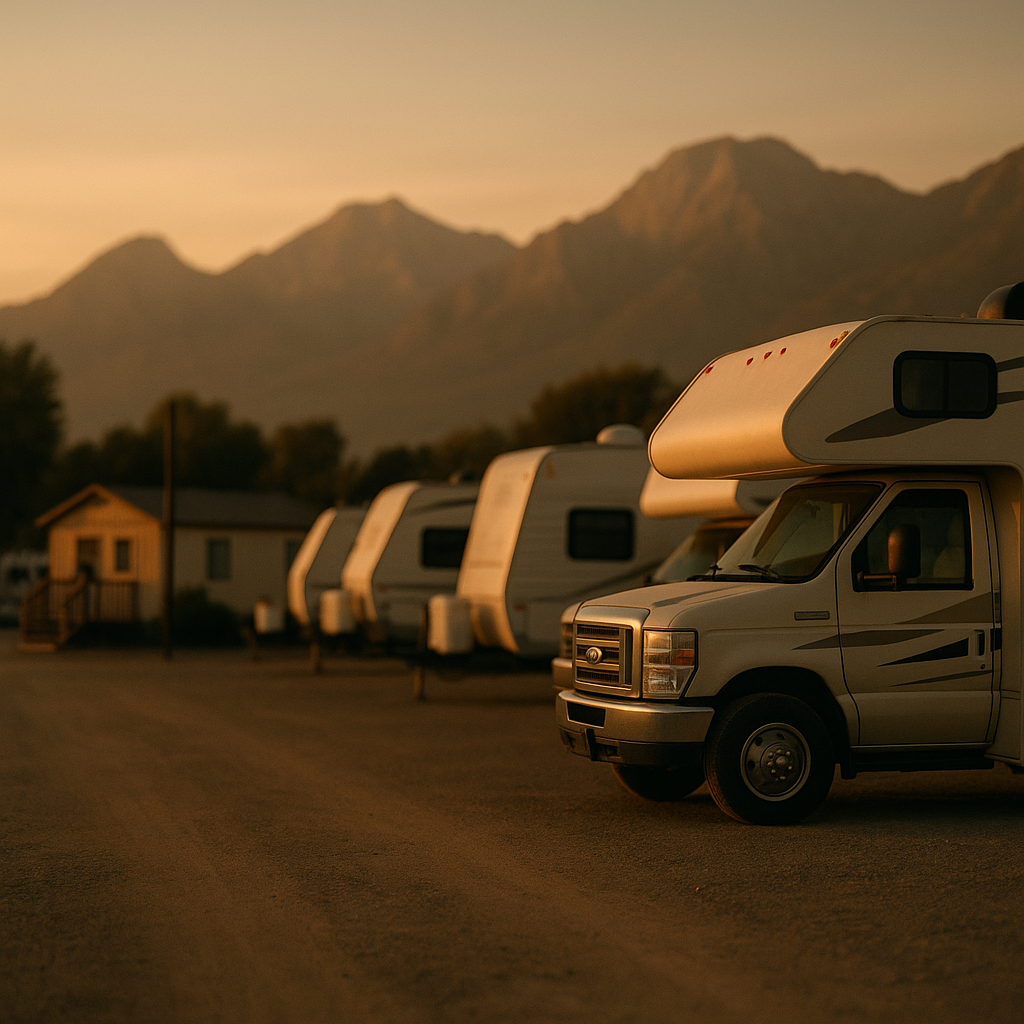
If you run an RV park from a pickup, a golf cart, or wherever you happen to be standing when the phone rings, you already know the problem. Calls come in while you are checking hookups, helping a late arrival back into a site, or driving between properties, and every missed call is a booking that may never call back.
A good RV park phone system is not about adding more tech. It is about making sure reservations, rate questions, and after-hours calls get handled even when you do not have a front desk.
Why RV parks need a different kind of phone setup
Section titled “Why RV parks need a different kind of phone setup”Hotels usually have a front desk, a manager on duty, and someone near the phone. Many RV parks do not. A lot of owners wear every hat themselves, especially in small or seasonal operations.
That changes what a phone system needs to do.
You are not sitting at a reception counter
Section titled “You are not sitting at a reception counter”Most RV park owners answer calls while moving. You might be:
- checking power pedestals
- dealing with a water issue
- cleaning a bathhouse
- guiding an arrival to a pull-through site
- off property buying supplies
A basic cell phone setup breaks down fast in that environment. If you miss the call, it goes to voicemail. If you answer while multitasking, the guest hears wind noise, truck sounds, and distractions. If they ask about rig length, sewer hookups, pet rules, or monthly rates, you may not have the information in front of you.
An RV park phone system should work as if you had a calm, informed desk agent, even when you do not have a desk.
Your calls are repetitive, but they still matter
Section titled “Your calls are repetitive, but they still matter”A large share of incoming calls are the same questions over and over:
- Do you have availability this weekend
- Can you fit a 40-foot motorhome
- Are pets allowed
- Do you have full hookups
- What are your nightly, weekly, or monthly rates
- Is there late check-in
- How close are you to the highway or local attraction
These are simple questions, but they are tied directly to occupancy. If nobody answers, callers often move to the next park. Travelers on the road are making decisions quickly.
Speed matters more than perfect polish
Section titled “Speed matters more than perfect polish”For independent operators, the biggest risk is not sounding fancy. It is being unavailable.
An effective phone setup for an RV park should prioritize:
- answering every call
- capturing booking intent
- handling common questions accurately
- passing along urgent issues quickly
- reducing interruptions while you work
That is the real job.
What to look for in an RV park phone system
Section titled “What to look for in an RV park phone system”There are plenty of phone tools on the market, but not all of them fit a park that is managed from the field. The right setup should be simple, reliable, and built around reservation flow.
24/7 call answering
Section titled “24/7 call answering”Road travelers call at odd times. Some call early before they drive. Others call late after they have been on the road all day. If your phone only gets answered during the hours when you happen to be free, you lose bookings.
Look for a system that can:
- answer after hours
- handle overflow when you are already on another call
- respond consistently during weekends and peak season
- keep answering even when you are in an area with poor signal
This matters even more for same-day bookings. A lot of RV reservations are not planned weeks in advance. They are made from the road.
Reservation intake, not just voicemail
Section titled “Reservation intake, not just voicemail”Voicemail is not a reservation process. It is a pile of calls you have to return while doing ten other things.
A useful RV park phone system should collect the details you actually need, such as:
- arrival and departure dates
- RV type and length
- number of guests
- hookup needs
- pet information
- contact details
- preferred site type if relevant
If a caller is ready to book, the system should move them forward instead of asking them to wait for a callback.
Clear call routing for urgent issues
Section titled “Clear call routing for urgent issues”Not every call is a reservation. Some need immediate attention:
- power outages
- gate access problems
- blocked sewer connection
- guest locked out of a facility
- after-hours arrival with no site instructions
You do not want these buried under general inquiries. The phone system should separate urgent on-property needs from regular booking calls so the right message reaches you quickly.
Local, professional caller experience
Section titled “Local, professional caller experience”A local number helps build trust. So does a consistent greeting that answers basic questions before the guest has to ask.
This does not mean sounding corporate. It means sounding organized.
Useful basics include:
- your park name clearly stated
- check-in and office hours
- availability and reservation flow
- directions to your website or booking page
- emergency instructions for current guests
For owners comparing options, this is where an AI receptionist or automated call answering layer can make more sense than a traditional business phone tree. You can see how it works if you want a model built around lodging calls rather than generic office routing.
A practical phone setup for RV park owners who manage from a truck
Section titled “A practical phone setup for RV park owners who manage from a truck”If you are trying to keep this simple, do not overbuild it. Most independent parks need a setup that covers three things well: incoming reservations, guest support, and owner flexibility.
The basic stack that works
Section titled “The basic stack that works”A practical RV park phone system usually includes:
- one main business number
- automatic answering for all incoming calls
- reservation intake questions based on your site rules
- urgent guest call routing to your cell
- text or email summaries of every call
- optional forwarding when you want to answer live
This lets you stay reachable without being chained to the phone.
How calls should flow
Section titled “How calls should flow”Here is a simple call flow for a small RV park:
New reservation call
Section titled “New reservation call”The caller reaches your main number. The system answers immediately, asks the basic stay questions, shares key park info, and either captures the booking details or routes them into your booking workflow.
Existing guest with an urgent issue
Section titled “Existing guest with an urgent issue”The caller identifies they are already on site and need help. The system sends the alert to your cell right away.
General question
Section titled “General question”The caller gets common answers on rates, rig size limits, pet policy, check-in times, and hookups. If the question still needs you, you get the summary without having to start from scratch.
That is the difference between a phone system that reduces work and one that creates more of it.
Why this works better than using your personal cell alone
Section titled “Why this works better than using your personal cell alone”Using only your personal phone creates a few problems:
- no coverage when you are busy
- no consistency when calls go to voicemail
- no recordkeeping unless you write things down
- no separation between business and personal calls
- no after-hours handling
- no standard answers for common questions
A dedicated RV park phone system gives you structure without requiring a staffed office.
Common RV park call scenarios and how to handle them
Section titled “Common RV park call scenarios and how to handle them”The easiest way to judge a phone setup is to test it against real calls you get every week.
Scenario 1: The same-day traveler
Section titled “Scenario 1: The same-day traveler”A guest is driving through and needs a site tonight. They want to know price, hookups, and whether you can handle their rig length.
If the call goes to voicemail, odds are they call the next park within minutes. If the call is answered right away and your system gathers the details, you keep the booking alive.
Best practice:
- answer immediately
- confirm key fit questions
- provide next steps for reservation
- send you a summary fast if approval is needed
Scenario 2: The late arrival
Section titled “Scenario 2: The late arrival”The guest has already booked but is arriving after office hours. They need gate instructions or site details.
If they cannot reach anyone, they may park in the wrong place, wake up other guests, or leave a bad review before they even settle in.
Best practice:
- include after-hours arrival instructions in your call flow
- route unresolved access problems to your phone
- keep a standard process for late check-in questions
Scenario 3: The monthly stay inquiry
Section titled “Scenario 3: The monthly stay inquiry”Monthly guests often have more detailed questions about rates, utility rules, mail, vehicle limits, and park policies.
These calls can take a lot of time when you answer them live from the truck. A good system can qualify the caller first and collect the details before you jump in.
Best practice:
- gather length of stay
- confirm rig type and occupancy
- share baseline policy information
- send you a structured lead summary for follow-up
Scenario 4: The current guest with a real issue
Section titled “Scenario 4: The current guest with a real issue”A pedestal is not working. A water line has low pressure. A restroom lock is jammed.
You need those calls to reach you quickly, but you do not need every rate shopper interrupting the same way.
Best practice:
- separate current guest support from reservations
- define what counts as urgent
- route only priority issues to your live phone
Scenario 5: The owner who is driving
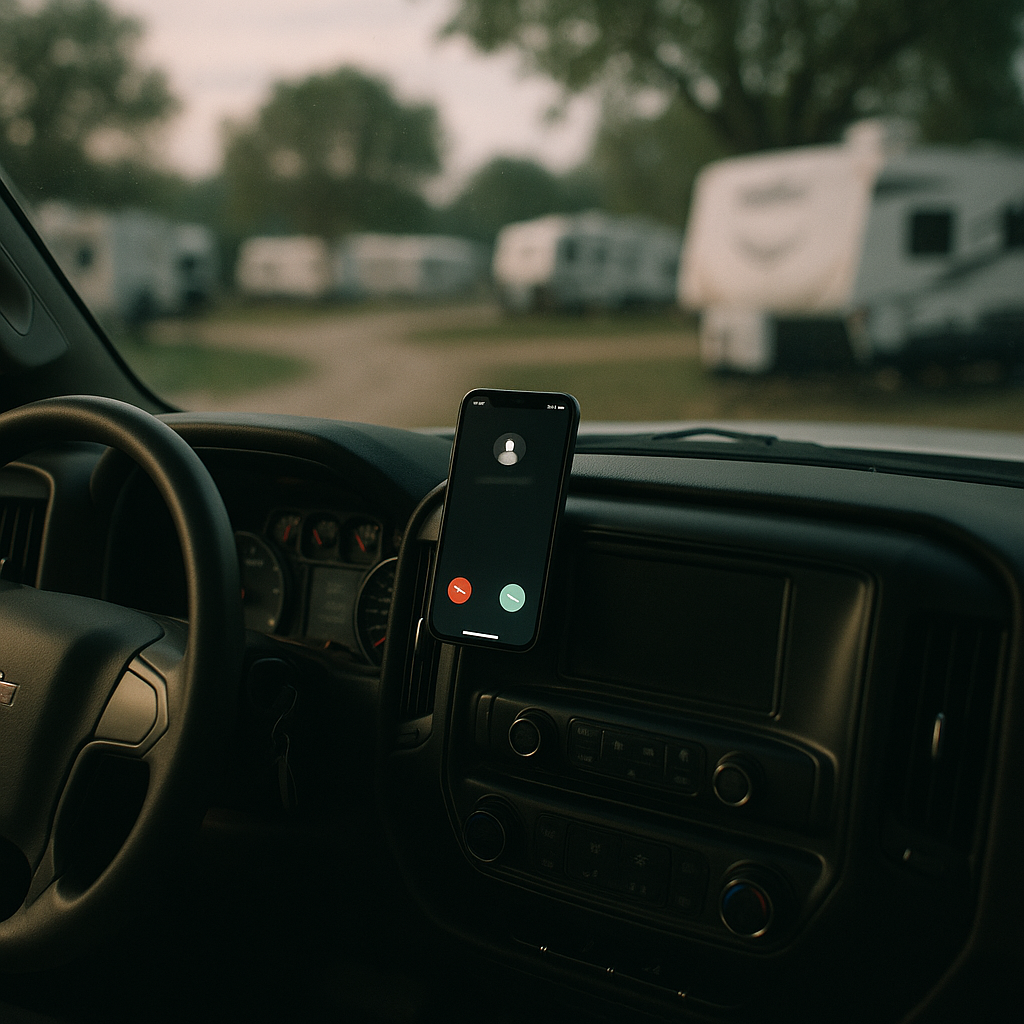
Section titled “Scenario 5: The owner who is driving”This is the one nobody talks about enough. You are on the road towing equipment or heading into town, and the phone rings. You should not be trying to take down dates and credit card details while driving.
Best practice:
- let the system answer while you drive
- review summaries safely when stopped
- call back only when needed
The numbers: what a better phone setup can save and earn
Section titled “The numbers: what a better phone setup can save and earn”For many RV parks, phone handling is an occupancy issue first and an efficiency issue second. Even small gains can matter.
Missed calls usually mean missed bookings
Section titled “Missed calls usually mean missed bookings”If your park gets 8 reservation-related calls a day during peak periods and you miss 25% of them, that is 2 missed opportunities daily.
Let’s say:
- 2 missed booking calls per day
- 30 peak-season days per month
- 35% of those callers would have booked if answered
- average stay value of $85 per night
- average length of stay of 2 nights
Potential monthly revenue lost:
2 missed calls x 30 days = 60 missed calls 60 x 35% conversion = 21 lost bookings 21 x $170 average booking value = $3,570 per month
Even if your actual conversion is lower, the math gets real fast.
Owner time has value too
Section titled “Owner time has value too”Now look at labor. If you spend:
- 10 minutes per general inquiry call
- 8 repetitive question calls per day
- 30 days in a busy month
That is:
10 x 8 x 30 = 2,400 minutes 2,400 minutes = 40 hours per month
Forty hours spent answering the same questions is a full workweek. If your phone system handles most of those calls cleanly, you get that time back for maintenance, guest experience, marketing, or simply fewer interruptions.
The ROI framework for a small park
Section titled “The ROI framework for a small park”Here is a simple way to evaluate an RV park phone system:
Revenue gained
Section titled “Revenue gained”How many missed reservation calls are now being answered and converted
Time saved
Section titled “Time saved”How many hours are no longer spent on repetitive calls and voicemails
Fewer mistakes
Section titled “Fewer mistakes”How often fewer guest issues come from missed late arrivals, bad message-taking, or inconsistent information
Better review protection
Section titled “Better review protection”How often current guest problems get routed faster before they become complaints
If a system costs far less than one or two recovered bookings per month, it is probably worth a serious look. You can review pricing against your own call volume and average booking value.
How to choose the right RV park phone system without overcomplicating it
Section titled “How to choose the right RV park phone system without overcomplicating it”Owners often get stuck comparing features they will never use. Start with your operating reality instead.
Ask these five questions first
Section titled “Ask these five questions first”1. Can it answer every call, even when I cannot
Section titled “1. Can it answer every call, even when I cannot”If the answer is no, move on.
2. Can it collect booking details in a usable format
Section titled “2. Can it collect booking details in a usable format”You need more than a recording. You need structured reservation information.
3. Can it separate urgent guest issues from general inquiries
Section titled “3. Can it separate urgent guest issues from general inquiries”This protects your time and your guests.
4. Can it fit my park’s actual policies
Section titled “4. Can it fit my park’s actual policies”Your setup should reflect your rig size limits, pet rules, office hours, site types, and late check-in process.
5. Can I run it without becoming a phone-system admin
Section titled “5. Can I run it without becoming a phone-system admin”If setup and upkeep are a headache, it will not last.
Keep your implementation simple
Section titled “Keep your implementation simple”A lot of owners do best with this rollout plan:
Week 1: Map your top 10 call types
Section titled “Week 1: Map your top 10 call types”Write down the exact questions you hear most often.
Week 2: Define your rules
Section titled “Week 2: Define your rules”Set the answers for rates, arrival hours, pets, site fit, and emergencies.
Week 3: Launch with basic call handling
Section titled “Week 3: Launch with basic call handling”Do not try to solve every edge case on day one.
Week 4: Review real call summaries
Section titled “Week 4: Review real call summaries”Tighten the scripts and routing based on what people actually ask.
This approach gets you 80% of the value quickly.
What not to do
Section titled “What not to do”Avoid these common mistakes:
- building a long, annoying phone menu
- forcing every caller to leave voicemail
- using different answers depending on who picks up
- routing all calls to your personal cell all day
- ignoring after-hours reservation demand
- failing to distinguish guest emergencies from sales calls
Simple and reliable beats feature-heavy every time.
FAQ: RV park phone system questions owners ask
Section titled “FAQ: RV park phone system questions owners ask”Do I need a full office phone system for a small RV park
Section titled “Do I need a full office phone system for a small RV park”No. Most small parks need a dedicated business number and a call-handling setup built for reservations and guest support. If you manage from the field, flexibility matters more than desk hardware.
Can an RV park phone system help with after-hours bookings
Section titled “Can an RV park phone system help with after-hours bookings”Yes. This is one of the biggest benefits. Travelers often book in the evening, and missed after-hours calls can turn into lost same-day stays.
What should the system ask callers before sending me the lead
Section titled “What should the system ask callers before sending me the lead”At minimum: arrival date, departure date, RV type, rig length, guest count, hookup needs, pet details, and callback information. Those details help you respond quickly without repeating the same questions.
Is using my cell phone enough if my park is small
Section titled “Is using my cell phone enough if my park is small”Usually not for long. A personal cell works until call volume rises, you miss bookings, or current guests cannot reach you in time. A proper RV park phone system adds consistency and separates business communication from your personal line.
How do I know if switching is worth the cost
Section titled “How do I know if switching is worth the cost”Look at how many calls you miss, how often callers leave incomplete voicemails, how much time you spend answering routine questions, and your average booking value. If one or two saved bookings per month cover the system, the numbers are already pointing you in the right direction.
If you run your RV park from a truck, the phone system should work where you work. It should answer every call, capture reservation demand, route urgent guest issues properly, and let you stay focused on the property instead of chasing voicemails. If you want a setup built for small lodging operators, check out pricing.